


Signal Loss Across the Funnel
Personality and cultural signals are flattened into fixed traits and percentile scores, erasing how candidates adapt across stages and contexts.
Dynamic Identity Loss

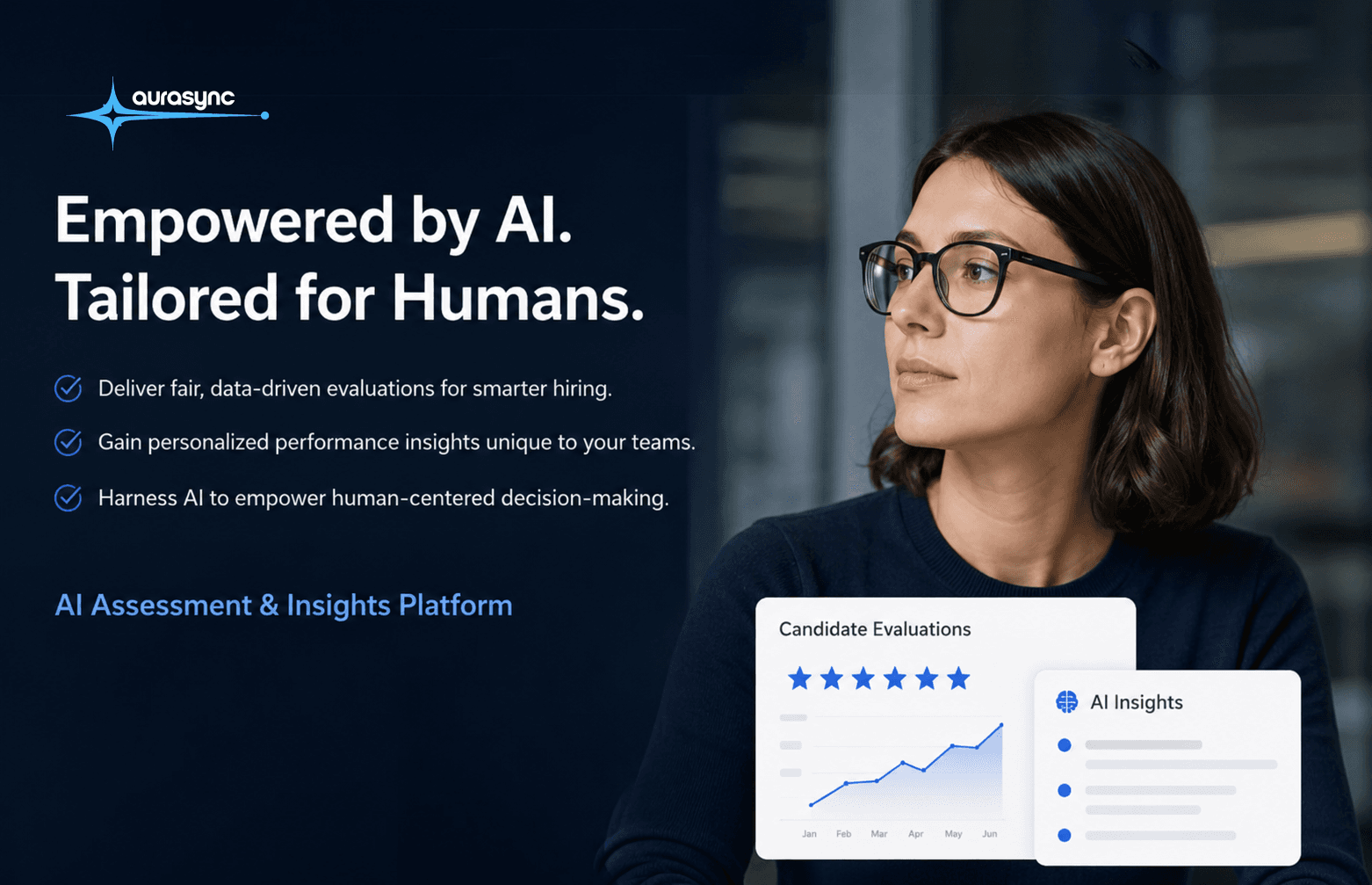
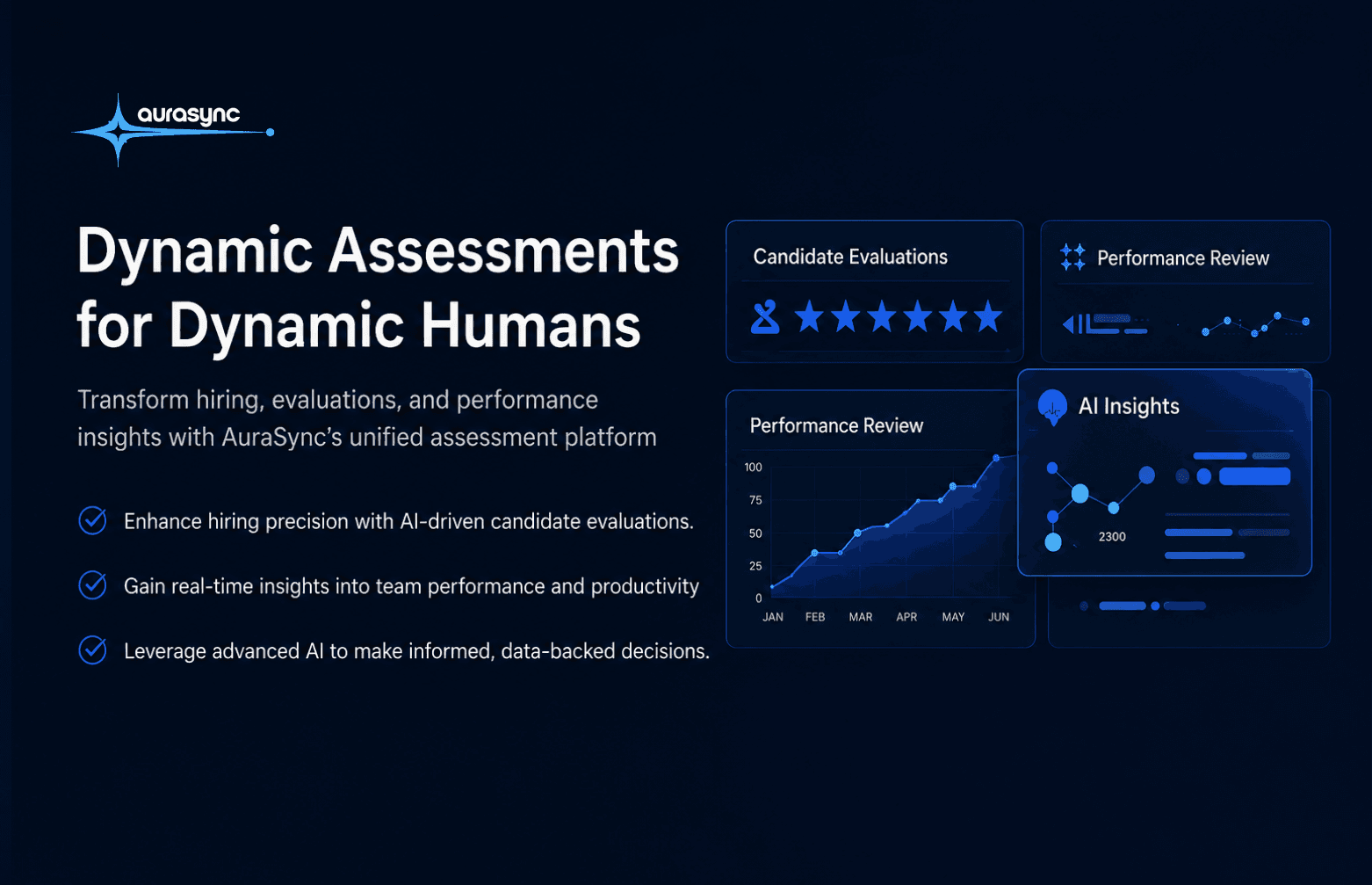
Modern hiring replaced resumes with assessments, but the problem remains. Static, rule-based frameworks reduce dynamic human behavior into fixed scores. AuraSync replaces static evaluation with living personality intelligence.
Decision Integrity
Fragile
Decisions rely on rigid assessment scores that break under real-world complexity.
Signal Coverage
Incomplete
Personality nuance, adaptability, and collaboration never survive rule-based scoring.
Time-to-Confidence
Delayed
Teams debate assessment results instead of trusting decision-grade evidence.
Assessment tools generate scores, not understanding. They capture how candidates answer questions, not how they behave under ambiguity, pressure, and real collaboration.
Static assessments create false confidence. When misalignment surfaces post-hire, the cost is paid through attrition, team drag, and leadership risk.
The hiring stack looks modern on the surface, but the core decision engine still runs on human intuition.
Personality and cultural signals are flattened into fixed traits and percentile scores, erasing how candidates adapt across stages and contexts.
Dynamic Identity Loss
Most assessments rely on predefined mappings between answers and traits, assuming humans behave consistently across situations, but they don't.
Situational Variance Blindness
Static assessments fail to predict real-world execution. Misalignment only becomes visible after onboarding.
Delayed Misalignment
Culture is lived in interaction, not selected in multiple-choice questions. Rule-based systems miss collaboration dynamics entirely.
Interaction Blindness
Assessment results rarely connect back to post-hire performance, so mistakes are repeated quarter after quarter.
Learning Decay
Scores look objective, but offer little insight into why a candidate is truly aligned or risky in context.
Opacity Risk
Teams have ATSs, assessments, and structured interviews, but those tools still focus on proxy signals. The missing layer is personality evidence tied to role outcomes.
When signals are weak, decisions default to consensus and gut-feel. This slows hiring and increases variance across teams.
The earliest decision errors compound downstream, creating a cascade of performance drag.
01
Capture declared traits, not real behavior under pressure.
Inflexible
02
Hiring teams interpret scores differently, reintroducing bias and inconsistency.
Inconsistent
03
True personality gaps surface only after real work begins.
Reactive
04
One mis-hire destabilizes execution, morale, and leadership trust across the team.
Destabilizing
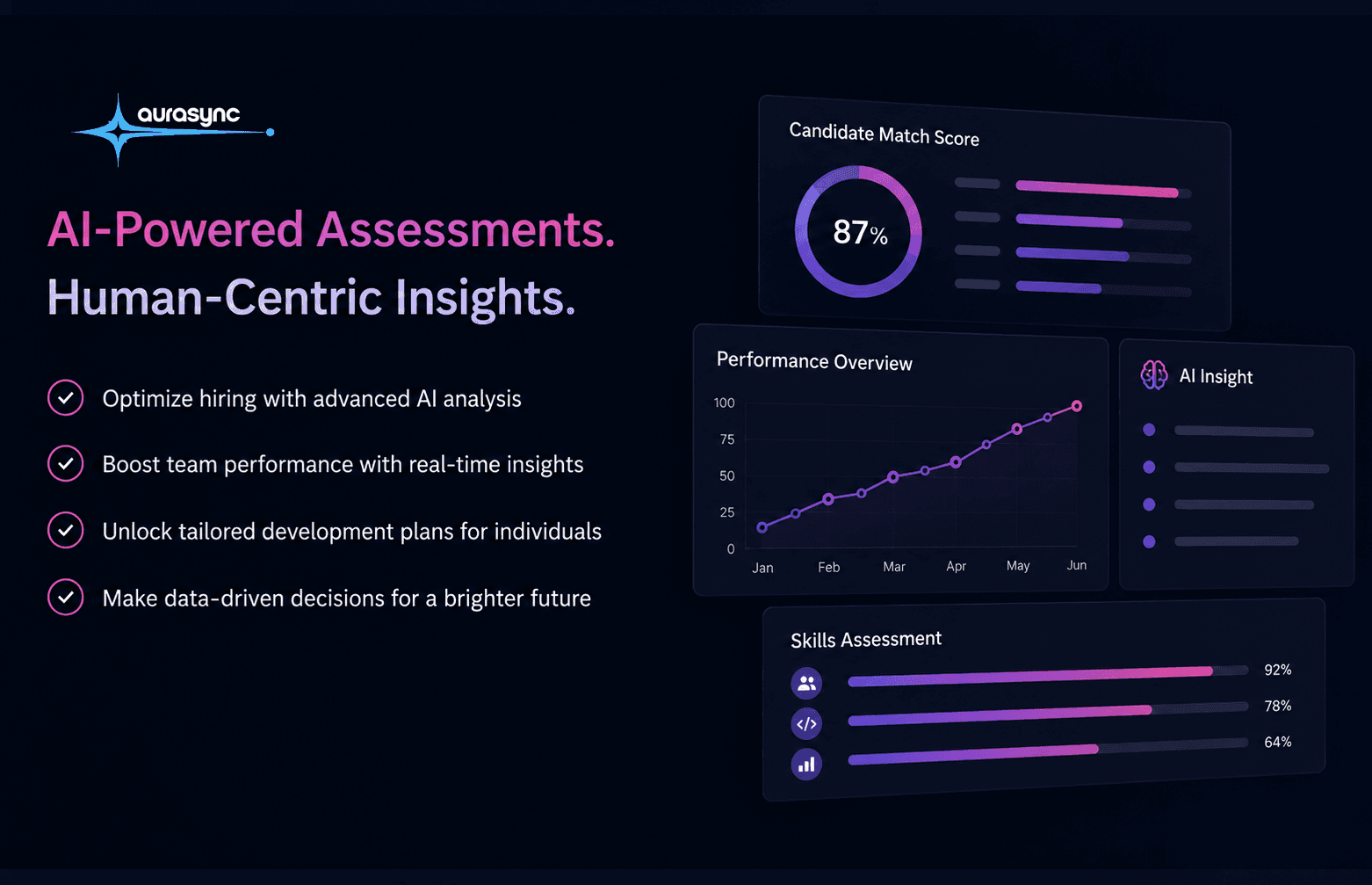
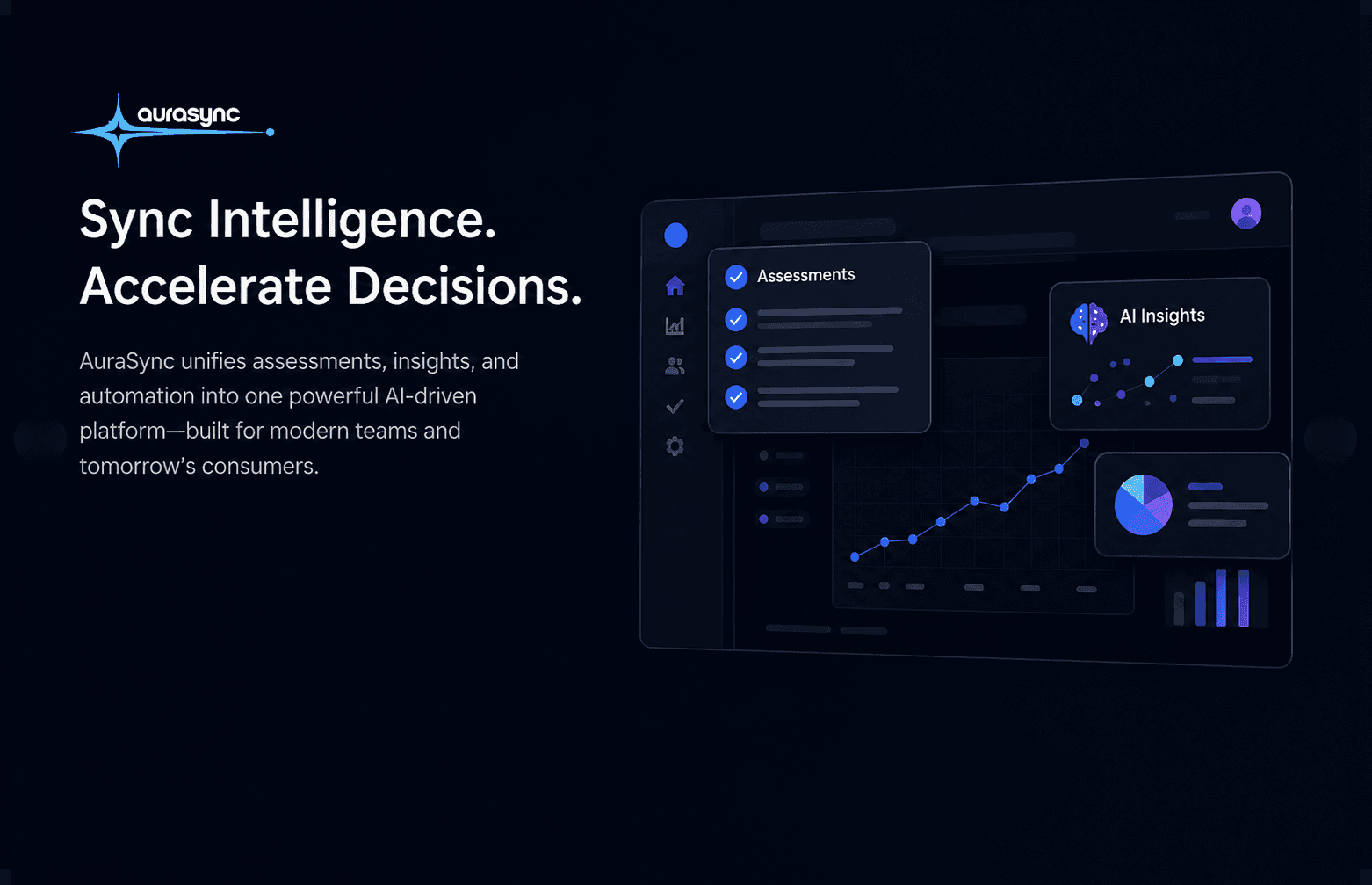
AuraSync is built around the minimum capabilities the market has been missing.
Requirement 1
Measure how candidates decide, collaborate, and adapt, not how they self-report.
Requirement 2
Behavior must be interpreted relative to role, team, and environment.
Requirement 3
Move beyond fixed thresholds to dynamic, explainable personality modeling.
Requirement 4
Tie hiring signals to real outcomes so decisions improve over time.
These requirements form the baseline for decision-grade hiring: measure behavior, map it to outcomes, and build a feedback loop that continuously improves the model.
When personality intelligence is captured end-to-end, teams make faster, clearer, and more defensible hiring decisions.
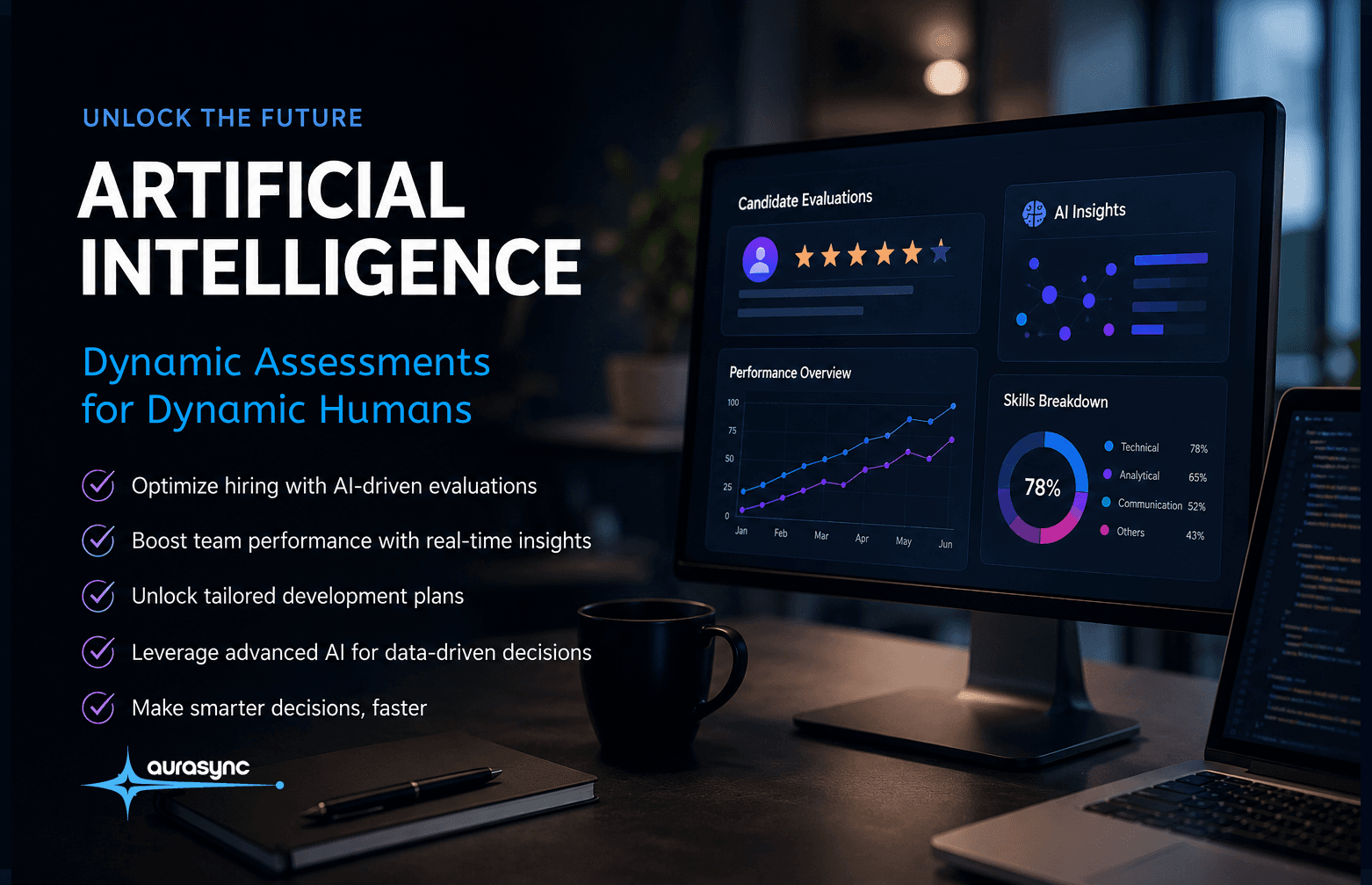
Teams act on shared personality truth, not debated assessment scores.
Hiring decisions reflect how people actually perform in real conditions.
Every hire improves the system’s understanding of human performance.